
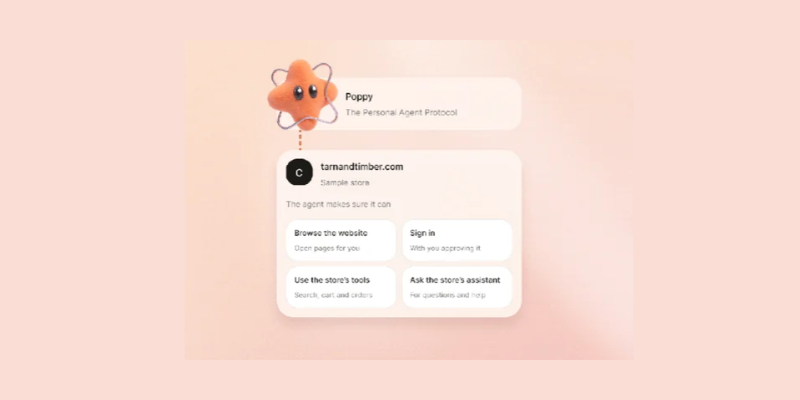
Okta is expanding its identity security offerings with Auth0’s new Auth for Personal Agents solution, designed to establish the identity verification and customer consent safeguards needed for secure AI-driven transactions. The technology allows businesses to identify AI agents interacting with their websites, confirm they have the customer’s permission to perform specific tasks, and apply detailed permissions with expiration limits. For example, an agent may be allowed to browse products and fill a shopping cart, but must obtain additional human verification before completing a purchase.
Until now, businesses have been forced into an all-or-nothing choice: block these helpful personal agents as malicious bots, or let them in with unmanaged, wide-open access that puts customer data at risk. As one of the first identity providers to support Sierra’s Personal Agent Protocolopens in a new tab (Poppy), Okta enables brands across industries – from retail to travel and financial services – to welcome personal AI agents and allow them to discover products, complete tasks, and transact safely on a customer’s behalf while confidently verifying the human behind them.
“In the enterprise, IT enforces strict AI safety, but the consumer landscape is still the Wild West. In this new era, security and customer experience are no longer a trade-off: the exact same identity controls that stop malicious bots are what allow a customer’s trusted agent to securely transact,” said Gareth Davies, Chief Product Officer at Okta. “The future belongs to brands that build a secure ‘front door’ for personal agents to welcome customer transactions, which will drive massive revenue gains.”
Why this matters:
A massive shift in digital commerce is underway as consumers move beyond simple chat prompts and start delegating everyday tasks to proactive personal agents like Meta’s Muse, OpenAI’s Dots, and xAI’s Grok Bot. Unlike traditional agents, these personal agents operate with their own browsers to book flights, shop for retail goods, dispute charges, or compare financial products on a human’s behalf.
Personal agents represent a lucrative new revenue channel, but they also present an urgent dilemma for brands across industries. Because these agents can navigate existing websites and fill out forms just like a person – without needing a company’s API – they are the channel that brands control the least. When this happens, brands lose the ability to capture consumer attention, personalize the experience, and cross-sell related products. Instead of a rich, direct customer relationship, brands are forced to fulfill transactions without knowing who the customer is, what they want next, or how to keep them coming back.
How it works:
Introduced by Sierra and Meta alongside an ecosystem of initial design partners including Okta, Poppy is an open standard built on OAuth that gives personal agents a legitimate “front door” instead of a password field. Rather than impersonating as a human user, a Poppy-compliant agent arrives at a brand’s digital storefront as a recognized client with verified, scoped consent from the customer, helping ensure the agent doesn’t see or handle the user’s raw credentials.
With Auth for Personal Agents, consumers can now get:
- Direct, password-free authorization: Consumers can securely grant access to their favorite personal agents through a standard sign-in flow and consent screen. Because this is built on secure redirect-based authorization, personal agents do not see, store, or handle the user’s raw password.
- Granular control over agent actions: Consumers and merchants have clear visibility into exactly what permissions they are granting. They can easily allow an agent to perform specific tasks – such as tracking a flight, modifying a reservation, or completing a transaction – with the ability to easily revoke that access at any time.
- Safe, multi-stage interactions: Consumers can let their personal agents navigate brand websites as “guest” shoppers to securely build a cart or discover products pseudonymously, stepping in to authenticate only at the final point of purchase to keep their personal data safe.

For example, when shopping on a customer’s behalf, a shopping agent could browse and build a cart, then have the customer log in within the agent itself so the brand can pull in loyalty context and the customer can approve the actual checkout. That way, every interaction is tracked as one continuous, trusted transaction rather than a stunted handoff, and the brand can personalize the experience using its existing identity and relationship data.

By anchoring AI agents to verified human identities through open standards like Poppy, Okta is empowering the world’s leading brands to turn a surging wave of automated traffic into trusted, high-converting customer relationships.
Because a future built on personal AI agents requires absolute trust across competing tech ecosystems, an independent and neutral identity provider like Okta is essential in unifying these emerging standards to help ensure secure delegation works seamlessly for every brand, agent, and consumer.
To sign up for the Auth for Personal Agents Beta Program, visit here.
Related News:
Security Survey Finds Nearly Half Still Rely on Passwords
Commvault Extends Protection for Identity Systems with Okta Support