
CleanStart provides a secure foundation for modern software development, helping organizations build, deploy, and operate software that is trusted, compliant, and secure from the start. By integrating security, compliance, and software provenance into every stage of the build process, the platform gives enterprises confidence throughout the software delivery lifecycle—from source code to production.
Nilesh Jain is a seasoned professional with over two decades of industry experience. He is the Co-Founder and CEO of CleanStart, a cybersecurity company that is advancing software supply chain security on a global scale. He spearheads the organization’s overall vision, business strategy and operations while building strong relationships with investors and shaping expansion into international markets.
Can you share the most interesting story that happened to you since you started your career, especially one that shaped your leadership approach at your current company?
One experience that deeply shaped my leadership approach came during a major software supply chain incident. I watched security teams work around the clock patching systems, scanning environments, and responding to downstream risk already running in production.
But one question stood out to me: Can we actually trust how this software was built in the first place?
What struck me was that even mature organizations had very limited visibility into the origins of the software they were deploying. Teams were spending enormous energy reacting after the fact, while the foundational trust problem remained unresolved.
That experience changed how I think about security leadership. I became convinced that trust has to start much earlier in the software lifecycle, especially at the build stage. That thinking ultimately shaped CleanStart and our focus on verifiable container images, reproducible builds, and reducing inherited risk before workloads ever reach production.
What initially brought you to this specific career path, and how did it lead to your role in this company?
I’ve spent much of my career working across infrastructure, cloud systems, and enterprise software delivery. Over the years, I kept seeing the same pattern repeat itself: development moved faster, infrastructure became more automated, and security teams gradually lost visibility into what was actually entering production.
Containerization accelerated that challenge. Most organizations could scan for vulnerabilities, but very few could verify software provenance, understand inherited risk, or confidently remediate insecure images without slowing developers down.
Seeing the gaps in security that businesses were facing ultimately led my co-founders and me to start CleanStart. We wanted to rethink container security from the foundation itself by building trusted, verifiable images that security teams can rely on and developers can adopt without friction.
What makes your company stand out from competitors in the market? Can you share an example that highlights this?
Most security products focus on identifying risk after software has already been assembled and deployed. At CleanStart, we take a different approach by reducing inherited risk during the build process itself while preserving existing developer workflows.
A good example is our work around BusyBox in container environments. BusyBox is deeply embedded across modern container images and often enters through upstream dependencies that developers never intentionally chose. Instead of simply flagging the issue after deployment, we replaced that exposure with a memory-safe alternative enforced directly at build time.
What made this meaningful for customers was that they could significantly strengthen their security posture without rebuilding pipelines or rewriting Dockerfiles. Balancing stronger security and operational simplicity is what really differentiates us.
Are you working on any exciting new products or projects? How do you think this innovation will positively impact your customers?
We recently introduced CleanSight by CleanStart, a container asset discovery and remediation platform designed to help organizations uncover hidden software risk across hybrid environments.
One of the biggest challenges security teams face today is simply visibility. Many organizations do not have a clear inventory of the container assets running across cloud, on-premises, and disconnected environments. That makes it difficult to understand exposure, inherited vulnerabilities, or where risky software actually exists.
CleanSight addresses that by helping teams discover container assets, generate SBOMs, analyze inherited vulnerabilities, and map findings to trusted remediation paths. The goal is to give customers earlier visibility and actionable context so they can reduce remediation delays, strengthen software trust, and make deployment decisions with greater confidence.
What was the tipping point for your company’s recent success? Was there a change in strategy or approach that others might learn from?
The tipping point for us came when we stopped trying to be another vulnerability scanning company and committed fully to being a prevention-first company.
The market already has plenty of tools that can identify problems after the fact. We believed the bigger opportunity was eliminating unnecessary risk before it ever enters production. Reframing how we approached those issues changed how we built the product, how we spoke to customers, and even how we hired internally.
At CleanStart, one phrase became a guiding principle for us: “They find the problem. We eliminate it.”
Once the organization aligned around that idea, product decisions became clearer and customer conversations became much sharper. The lesson for us was simple: companies gain momentum when they stop following crowded categories and become very clear about the problem they uniquely solve.
Can you share a significant challenge your company faced and how you overcame it? What key lesson did that experience provide?
One of the biggest challenges we faced was navigating a true multi-persona sale. Our value proposition is strong: trusted software, verifiable container images, and reduced inherited risk. But different stakeholders care about very different outcomes.
The CISO is focused on risk reduction and software trust. The CTO cares about engineering velocity and operational integrity. Developers want security that integrates naturally into their workflows without slowing them down. If you deliver the same message to all three, you usually lose all three.
We had to build distinct but aligned narratives for each audience while keeping the core vision consistent. Once we got that alignment right internally, our customer conversations became far more effective.
The biggest lesson for me was that in cybersecurity, the strength of the product alone is not enough. Clarity of message for each stakeholder matters just as much as the technology itself.
In just a few words, what differentiates your leadership role from others in the company? What impact does this have on company culture or product success?
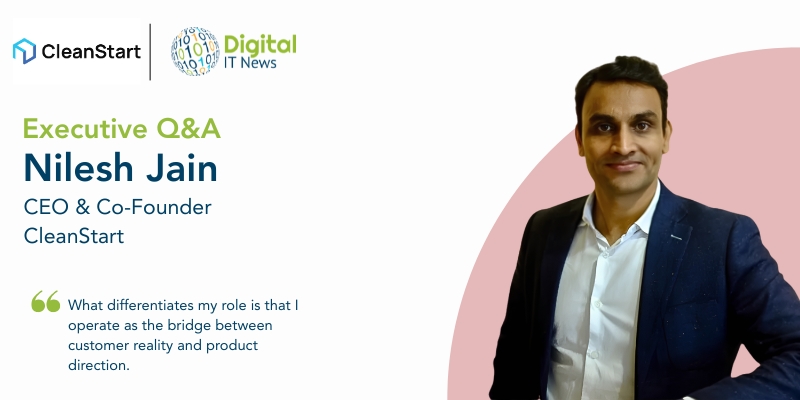
What differentiates my role is that I operate as the bridge between customer reality and product direction.
My co-founders bring deep expertise across go-to-market and engineering, and my responsibility is making sure those functions stay closely aligned. I spend a lot of time translating what CISOs, CTOs, developers, and partners are experiencing into product priorities and strategic decisions.
Those experiences have shaped our culture in a meaningful way. Our engineering decisions stay grounded in real customer problems, and our sales conversations remain aligned with what the platform can genuinely deliver. In cybersecurity, that alignment is critical because credibility matters as much as innovation.
Related News:
7 SASE Platforms: Which is Best For You?
Hack The Box Report Reveals AI’s Impact on Cybersecurity Jobs