
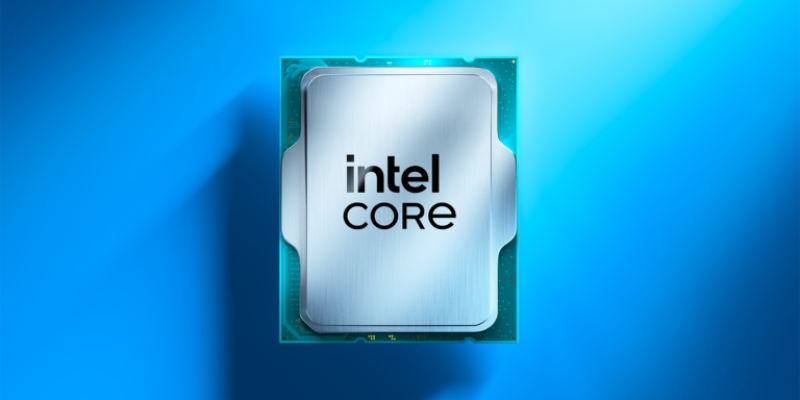
At Embedded World 2026, Intel introduced the Intel Core Processor Series 2 with P-cores, an industrial-grade platform designed for mission-critical edge deployments. Intel also unveiled its newest Edge AI suite for Health & Life Sciences, offering validated reference pipelines and benchmarking tools to support AI-driven patient monitoring solutions.
“Intel continues to lead in edge computing, which remains one of our fastest-growing business segments,” said Dan Rodriguez, Intel corporate vice president and general manager of the Edge Computing Group. ” With the introduction of Core Series 2, our CES launch of Core Ultra Series 3, and our expanding Edge AI Suites, we continue to deliver comprehensive platforms that meet diverse edge customer needs with breakthrough performance, reliability, and integrated AI acceleration.”
Intel Core Series 2 Solves Industrial Real-Time Challenges
Intel Core Series 2 processors address the critical challenges facing modern industrial operations, which demand processors that can handle multiple critical workloads simultaneously—from safety-critical control systems to real-time data processing—all while maintaining precise timing and deterministic performance. Traditional processors often force manufacturers to choose between computational power and real-time reliability, leading to complex multi-processor architectures that increase costs and system complexity. Intel Core Series 2 processor take these challenges head-on. Compared to AMD Ryzen™ 7 9700X, Intel Core Series 2 processors deliver up to 4.4x lower max PCIe latency1, up to 2.5x more deterministic response time2, up to 3.8x better deterministic performance3, and up to 1.5x higher multi-thread performance4, delivering the performance the industry needs.
Edge AI Suites Accelerate Healthcare AI Innovation
Intel previewed its Health & Life Sciences AI Suite, focused on AI-enabled patient monitoring. As healthcare systems face growing patient volumes and staffing constraints, patient monitoring is evolving from isolated devices to intelligent, connected ecosystems that demand AI-enabled solutions for earlier insights and reliable real-world operation. The suite showcases concurrent, multimodal workloads running locally on Intel processors—including AI-based electrocardiogram (ECG) arrhythmia detection, remote photoplethysmography, and anonymous 3D visual tracking—helping original equipment manufacturers (OEMs), original design manufacturers (ODMs), and independent software vendors (ISVs) evaluate platforms using representative scenarios rather than synthetic benchmarks.
Together with the recently launched Core Ultra Series 3 processors, Intel Core Series 2 processors with P-cores and the new Health & Life Sciences Edge AI Suite demonstrate Intel’s comprehensive edge portfolio that addresses the full spectrum of customer requirements—from deterministic real-time control to advanced AI acceleration—enabling faster innovation across manufacturing, healthcare, and emerging edge applications.
Availability: Edge systems powered by Intel Core Ultra Series 3 and Intel Core Series 2 with P- cores are all available now.
A preview version of the Edge AI suite for Health & Life Sciences is now accessible on GitHub and general availability is planned for Q2 2026.
To learn more about the Intel Core Series 2 and its Edge AI capabilities for industrial and healthcare applications, visit the website here.
Related News:
Intel Core Ultra Series 3 Debuts at CES 2026
Q&A: Senior Product Manager Joel Polanco Driving Edge Computing at Intel
Small Print:
1 As estimated by maximum PCIe read latency on Intel® Core 9 processor 273PE running at TDP = 65W and AMD RyzenTM 7 9700X at TDP = 65W. Individual system results may vary as power and performance are affected by use, configuration and other factors.
2 As As estimated by max latency on cyclic test on Intel® Core 9 processor 273PE running at TDP = 65W and AMD RyzenTM 7 9700X at TDP = 65W. Individual system results may vary as power and performance are affected by use, configuration and other factors.
3 As estimated by maximum jitter on RTC-testbench on Intel® Core 9 processor 273PE running at TDP = 65W and AMD RyzenTM 7 9700X at TDP = 65W. Individual system results may vary as power and performance are affected by use, configuration and other factors.
4 As estimated by SPECrate®2017_int_base (n copy) performance estimates. SPEC®, SPECrate® and SPEC CPU® are registered trademarks of the Standard Performance Evaluation Corporation. See http://www.spec.org/spec/trademarks.html for more information. Intel® Core 9 processor 273PQE running at TDP = 125W and Intel® Core i9-14901E at TDP = 65W. Individual system results may vary as power and performance are affected by use, configuration and other factors.