
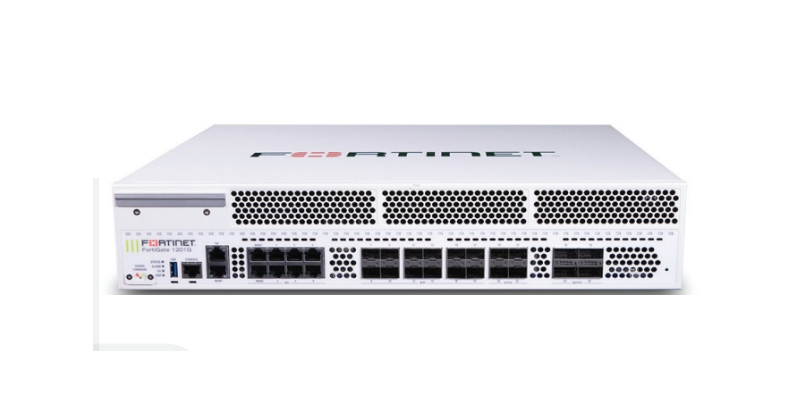
Fortinet has introduced the FortiGate 1200G series, the latest addition to its FortiGate G series, along with FortiSASE Outpost, extending cloud-delivered security services into customer-managed environments. The solution combines high-performance threat protection, advanced connectivity, hardware-based platform security, and cloud-native security capabilities, enabling organizations to deploy security where it best fits their operations. Whether securing on-premises infrastructure, edge locations, or cloud environments, organizations can achieve consistent protection, strong performance, and streamlined security management across hybrid environments.
The convergence of firewall and SASE technologies is creating a new SASE firewall market built for the realities of today’s hybrid world. Fortinet anticipated this shift by building FortiGate and FortiSASE on FortiOS and investing in proprietary ASIC technology that delivers security and performance at scale from day one. The FortiGate 1200G with FortiSASE Outpost capability advances this vision by combining local enforcement and cloud-delivered security to address customers’ evolving sovereignty, performance, and AI infrastructure requirements. – Ken Xie, Founder, Chairman of the Board, and CEO of Fortinet
FortiGate 1200G Series: High-Performance Security Built for AI Infrastructure
As AI adoption, encrypted traffic, and hybrid infrastructure reshape enterprise networks, organizations need to inspect growing traffic volumes without introducing performance bottlenecks. They also need the flexibility to determine where security enforcement occurs based on application performance, data sovereignty, compliance, and operational requirements.
Powered by Fortinet’s latest FortiASIC architecture, the FortiGate 1200G series accelerates networking and security processing to deliver predictable, low-latency protection for demanding enterprise and data center environments. Flexible 10G, 25G, and 100G connectivity helps organizations modernize their infrastructures, while hardware-rooted protections strengthen the integrity and resilience of the FortiGate 1200G.
Key benefits of the FortiGate 1200G include:
- Keeping applications fast: Predictable low-latency inspection powered by FortiASIC enables organizations to secure encrypted and AI-driven traffic without sacrificing application performance.
- Modernizing with room to grow: Flexible connectivity supports campus, data center, and hybrid environments while providing headroom for future AI-driven growth.
- Increasing operational resilience: Hardware-rooted protections, secure credential storage, and built-in redundancy strengthen platform integrity and improve business continuity.
- Reducing operational complexity: FortiOS consolidates networking and security while enabling consistent policy management across appliances and cloud-delivered services.
When configured as a FortiSASE Outpost, the FortiGate 1200G can operate as a high-performance local SASE point-of-presence (POP), giving organizations another option for where security inspection and enforcement occur.
|
Specification |
FortiGate 1200G Series |
Security Compute Rating |
Competitors Average |
PAN PA-5410 |
Cisco Firepower 4115 |
Check Point Quantum 9800 |
Juniper SRX 2300 |
|
Firewall Throughput (Gbps) |
397.0 |
4.5x |
89.1 |
52.4 |
80.0 |
185.0 |
39.0 |
|
IPsec VPN Throughput (Gbps) |
102.0 |
2.8x |
36.5 |
20.0 |
15.0 |
75.0 |
36.0 |
|
Threat Protection (Gbps) |
40.0 |
1.8x |
22.0 |
35.0 |
|
25.0 |
6.0 |
|
Concurrent Sessions |
40M |
3.0x |
13.5M |
5M |
15M |
29M |
5M |
|
Connections Per Second |
1M |
2.4x |
411K |
270K |
210K |
715K |
450K |
|
Power Consumption |
FortiGate 1200G Series |
Energy Efficiency |
Competitors Average |
PAN PA-5410 |
Cisco Firepower 4115 |
Check Point Quantum 9800 |
Juniper SRX 2300 |
|
Watts/Gbps Firewall Throughput |
1.9 |
5.6x |
10.5 |
14.6 |
13.8 |
2.1 |
11.5 |
|
Watts/Gbps IPsec VPN Throughput |
7.3 |
4.4x |
32.4 |
38.0 |
73.3 |
5.6 |
12.5 |
- Threat protection performance is measured with firewall, IPS, application control and malware protection, and logging enabled.
- The numbers for competitive solutions are based on publicly available sources. Variations in testing methodologies and performance metrics may exist across different vendors.
- All power consumption values are taken from external data sheets and hardware system guides using maximum power consumption.
Industry analysts see converged firewall and SASE architectures as increasingly important for organizations preparing networks for AI-driven demands.
“Converged SASE and firewall platforms provide the flexibility to meet dynamic, AI-accelerated network architectures where they are, rather than becoming part of next year’s technical debt. Buyers that judge platforms only by how well they fit today’s environment, rather than how effectively they can adapt to tomorrow’s, are already behind.” – Pete Finalle, Research Manager at IDC
FortiSASE Outpost: Sovereign Security Delivered at the Edge
Organizations increasingly need the flexibility to determine where security inspection and enforcement occur based on their business, performance, sovereignty, and compliance requirements. Traffic can be routed through a cloud-based SASE POP, while data-sensitive, or latency-critical traffic can be processed locally through FortiSASE Outpost running on a FortiGate within a customer-controlled environment.
Configured as a FortiSASE Outpost, the FortiGate operates as an ASIC-accelerated on-site SASE POP, delivering security inspection, policy enforcement, and access control closer to users and data. Organizations can strategically place on-site POPs near large concentrations of users in regions without a nearby cloud POP, helping reduce latency, preserve application performance, and lower bandwidth costs.
This differentiated Fortinet architecture allows organizations to use Fortinet-operated POPs, on-site POPs, or both. The FortiSASE interface centrally manages configuration, policy, monitoring, lifecycle operations, and upgrades across both deployment models, maintaining consistent zero-trust policies, visibility and protection without treating the on-site POP as a separate security environment.
Organizations can also keep designated traffic, logs, and processing within defined geographic or private infrastructure boundaries to meet regulatory requirements and reduce connectivity costs without changing the end-user experience.
Protect Every User without Sacrificing Performance or Control
Regardless of where enforcement occurs, users receive a consistent access experience, and organizations maintain common security policies, visibility, and zero-trust controls. This enables security teams to keep designated traffic, processing, and logs within specific geographic, jurisdictional, or private infrastructure boundaries without creating a separate security architecture or changing how users connect to applications.
This deployment flexibility is especially important for AI-driven environments. Agents, applications and connected devices generate growing volumes of east-west traffic that may not need to be routed through a cloud POP and back. Using the FortiGate as a high-performance local enforcement point, organizations can inspect this traffic closer to the user. This helps reduce latency, preserve application performance, and maintain control over sensitive information.
Built on FortiOS, FortiGate and FortiSASE share policy, threat intelligence, security context, and zero-trust decisions across local and cloud-delivered environments. FortiGuard AI-Powered Security Services provide real-time intelligence and automated protection across both deployment models, while FortiAI helps security teams investigate and respond to threats faster without adding operational complexity.
Analysts also point to the need for architectures that let organizations choose where enforcement occurs without fragmenting policy, operations, or the user experience.
“Organizations should not have to choose between the scalability of cloud-delivered security and the performance, control, or sovereignty of on-premises enforcement. The convergence of these models is creating a meaningful new SASE firewall market. Fortinet is well positioned for this shift, enabling customers to apply security through cloud-delivered FortiSASE or locally with the FortiGate 1200G and with FortiSASE Outpost, based on what their business requires, while maintaining consistent policy, visibility, and user experience.” – Will Townsend, Chief Analyst, LoneStar Advisory and Research
Related News: