
Axiad is an identity security company founded by pioneers in encryption and credential management who helped develop PIV and CAC cards for secure government networks. Today, it addresses the growing risks of compromised credentials by uncovering hidden identity threats, improving credential hygiene, and integrating with existing IAM tools to reduce attack surface and enable phishing-resistant, passwordless security.
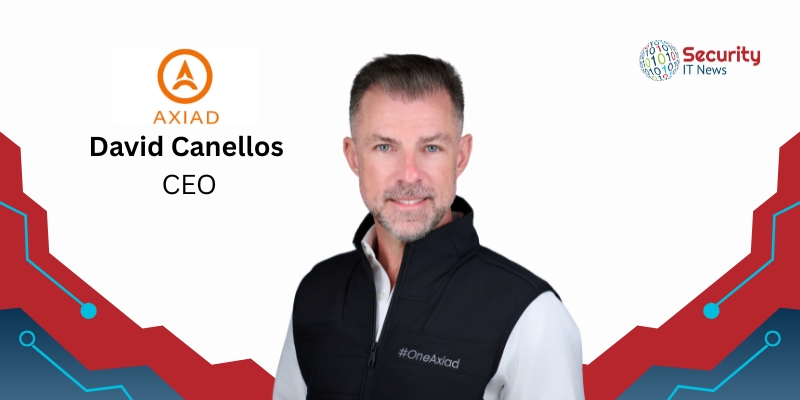
As CEO, David Canellos leads Axiad with a focus on clarity, speed, and measurable security outcomes, positioning Identity Risk Prevention at the center of the company’s strategy. With more than 20 years in cybersecurity and multiple successful exits, he has built companies that close the gaps legacy systems overlook. Under his leadership, Axiad delivers platforms like Mesh, Conductor, and Confirm to neutralize identity threats, automate credential lifecycle management, and eliminate password-based vulnerabilities—helping organizations secure access without disrupting user experience.
1. Career Journey: Can you share the most interesting story that happened to you since you started your career, especially one that shaped your leadership approach at your current company?
Early in my career, when I moved from an individual contributor into management, I watched a team that was held together by long-standing relationships. On the surface it looked collegial, but in practice there was an inner circle — long-tenured, speaking their own shorthand — and everyone else worked around it.
The politeness wasn’t mutual. It was performative. Outside that circle, people learned not to challenge decisions or standards. Meritocracy blurred, morale dropped for high performers, and over time mediocrity wasn’t confronted but instead, was normalized.
That experience shaped how I lead today. Teams can be friendly, but they can’t be insular. My bias is to run organizations like a professional sports team operating in a constant fourth-and-one situation — urgency is real, focus and execution matters, and the bar has to be explicit and evenly applied. That also means being comfortable making decisions that won’t please everyone — being comfortable being uncomfortable. One of the most important leadership lessons I’ve learned is that if you can find a way to be okay with being disliked, you can move faster, set clearer standards, and build teams that actually perform.
2. Career Path: What initially brought you to this specific career path, and how did it lead to your role in this company?
Early in my career, I made a deliberate choice about where to spend my time. In 2004, I looked at the tech landscape and chose cybersecurity because it was a secular, mission-critical problem that wasn’t going away. I joined Cloakware and never really looked back. Helping organizations go digital safely became my personal “why.” It’s less what I do and more who I am.
Over the next two decades, I worked across multiple parts of the security stack — network, cloud, and access controls. One pattern kept repeating: when something failed, it usually traced back to identity. We all assumed identity was verified upstream. In reality, it often wasn’t.
That’s what drew me to Axiad. Identity is still the least disrupted, most underfunded layer in security, yet everything else depends on it and a problem too important to ignore. At this stage of my career, time matters more than titles. When you see a problem that fundamental, you move. Axiad was that moment.
3. Company Differentiation: What makes your company stand out from competitors in the market? Can you share an example that highlights this?
Most identity programs today are still management systems. They provision accounts, enforce policies, and generate reports. But they don’t actually tell you where your identity risk is or what it’s costing you.
In large enterprises, identity sprawl is the real problem — multiple IAM stacks, SaaS silos, orphaned accounts, service credentials, certificates, and now AI agents. Security teams end up with alerts and checklists, without clarity.
What makes Axiad different is that we treat identity as a measurable risk problem, not an administrative one. With Axiad Mesh, we discover and correlate identities across all those systems, surface the ones that actually matter, and quantify exposure in economic terms. Instead of “10,000 findings,” a customer sees “here’s the $3.2M of annual risk concentrated in these 200 identities.” That changes behavior fast.
We do that for both sides of the house. For humans, we apply FAIR-style risk modeling to prioritize identity hygiene and access issues. For machines and non-human identities, we surface unmanaged certificates and crypto debt and help customers move to quantum-safe credentials. Market checks have told us that combining economic risk quantification for people with post-quantum readiness for machines is fairly unique in the market.
The result isn’t just better security. It’s velocity. Teams fix what matters instead of managing noise. That’s the difference.
4. Product Innovation: Are you working on any exciting new products or projects? How do you think this innovation will positively impact your customers?
Innovation for us isn’t a roadmap slide — it’s operating rhythm. One of our core values at Axiad is “Innovation,” and we realize that as continuous delivery, not occasional breakthroughs.
We’ve leaned hard into AI, not as a feature or assistant, but as an amplifier for engineering velocity. It changes how we build and how customers use the product. Recently, we ran a 48-hour engineering hackathon where teams shipped production-ready capabilities — things like AI-first, no-code connectors that dramatically reduce integration time, automated deployment pipelines, and smarter operational insights that cut troubleshooting and support effort.
That’s how Mesh evolves. It’s how we were able to move quickly into areas like identity risk quantification with FAIR-style modeling and post-quantum credential readiness while others are still planning. AI compresses the cycle between idea and customer value.
The impact for customers is simple: faster integrations, fewer manual processes, and quicker time to measurable risk reduction. Innovation should feel like momentum, not promises. Our goal is simple: if we can’t ship it faster and cheaper with AI, we don’t do it. That’s the standard we hold ourselves to. It’s not by accident that our brand promise is “Trusted identity. At the speed of now.”
5. Success Insight: What was the tipping point for your company’s recent success? Was there a change in strategy or approach that others might learn from?
The tipping point wasn’t a product launch or a funding round. Those were outcomes. The real change was operational.
When I joined Axiad, we made a deliberate decision to rebuild the company around ownership and velocity. We stripped out layers, tied accountability to named individuals instead of titles, and started measuring speed as a first-class metric. If something couldn’t move faster or ship cleaner, we treated that as an indicator that the system was wrong, not the people.
Finally, we leaned into an AI-first operating model to increase leverage instead of headcount. Smaller teams, higher output, fewer handoffs.
Once those pieces were in place, everything else followed, e.g., faster releases, stronger retention, FedRAMP progress, and new products moving from idea to market in weeks instead of quarters. The lesson is simple: culture and operating design create results. Tactics don’t.
6. Challenges and Lessons: Can you share a significant challenge your company faced and how you overcame it? What key lesson did that experience provide?
One of the biggest lessons for us came from something that looked like a success on paper. Our retention was strong — mid-90s Gross Revenue Retention — which most companies would celebrate.
But when we asked “why” a few times, we realized something uncomfortable. A lot of that performance was coming from Customer Success teams working heroically behind the scenes — stick-handling issues, saving renewals late, carrying relationships through sheer effort. It worked, but it wasn’t a system. Heroics don’t scale.
That was a risk. If retention depends on individual effort instead of design, it’s fragile.
So we changed the model. We stopped treating Customer Success as a support function and made it what we call “Next Sales.” Renewals and expansion are now owned like any other revenue motion, with clear funnels, explicit accountability, and measurable outcomes. Customer Success has a seat at the table alongside Sales and Marketing, and we run QBRs, CABs, and customer programs as growth engines, not check-ins.
The lesson was simple: customer commitment has to be structural, not heroic. When you design ownership into the system, retention and expansion become predictable instead of stressful.
7. Career Path: What initially brought you to this specific career path, and how did it lead to your role in this company?
I’m very operational. My role is to create clarity and speed.
We tie ownership to named individuals, not titles, set explicit outcomes, and measure velocity instead of activity. That removes ambiguity and lets teams execute without friction.
The impact is cultural and product-focused at the same time — fewer meetings, faster decisions, and products that ship quickly and solve real problems instead of adding complexity.
8. Leadership Impact: In just a few words, what differentiates your leadership role from others in the company? What impact does this have on company culture or product success?
I operate with a bias toward clarity and speed. Ownership is tied to names — not org charts or titles — and we measure outcomes and velocity, not activity.
My job is to remove ambiguity, set a high bar, and make decisions quickly so teams can execute without friction. When accountability is explicit and urgency is real, good people do their best work.
That operating style shows up directly in our products — simpler, faster, and built to deliver results.
Learn more about how Identity Risk Prevention is transforming enterprise security at scale with Axiad at the website here.
Related News:
Q&A: Galorath’s Julia Gerth on Leading the International Sales and Driving Global AI Growth
Q&A: Gilbert Leung on Advancing Digital Identity at AB Circle Limited