
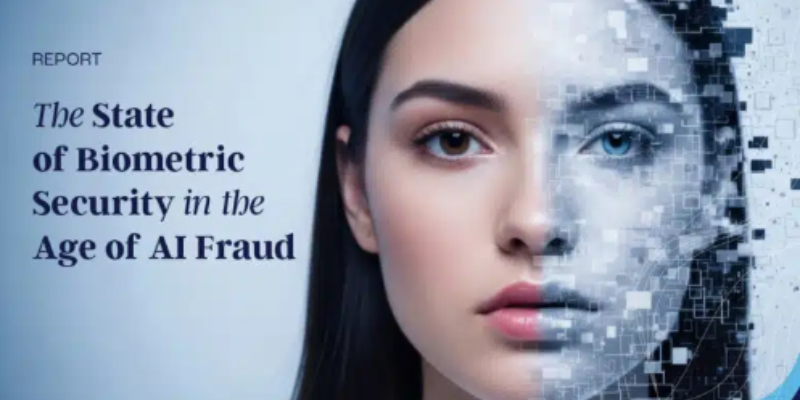
Aware, Inc. released a new report, The State of Biometric Security in the Age of AI Fraud, showing that 98% of organizations are interested in biometric orchestration amid rising AI-driven fraud and increasing identity system complexity. As businesses adopt multiple biometric technologies across different use cases, managing these solutions has become more challenging. The report defines biometric orchestration as a centralized platform that integrates and coordinates biometric systems, data sources, and workflows to deliver secure, scalable, and seamless identity verification.
In the State of Biometric Security report, the findings paint a clear picture: as threats like deepfakes, synthetic identities, and injection attacks become more sophisticated and widespread, organizations have turned to biometrics asa foundational layer of identity security, but are struggling to manage fragmented, multi-vendor environments.
“Organizations are no longer asking if they need biometrics—they’re already managing complex ecosystems and asking how to make them work together,” said Ajay Amlani, CEO of Aware. “Biometric orchestration is emerging as the critical layer that helps security teams stay ahead of AI-driven threats while maintaining performance, accuracy and user experience. It turns complexity into an advantage by enabling smarter, faster identity decisions.”
Key Findings from the State of Biometric Security Report
● 98% of organizations are interested in investing in a biometric orchestration platform
● Nearly 50% experienced AI-driven fraud in the past year
● Nearly 90% are concerned about AI attacks targeting biometric systems
● Over 60% use biometrics specifically to combat identity-related fraud
● 75% include biometrics or liveness detection in fraud prevention strategies
● Organizations use an average of three biometric vendors, highlighting ecosystem complexity
● More than half report revenue loss from AI-related fraud incidents
● Nearly half cite brand and reputational damage as a result of these attacks
AI-Driven Fraud Is a Mainstream Business Risk
The research shows that AI-powered fraud is no longer an emerging concern, and is already impacting organizations at scale. Nearly half of respondents report experiencing AI-related fraud in the past year, including attacks leveraging deepfakes, synthetic identities, and system-level injection techniques.
Concerns are equally widespread. Nearly nine in ten leaders say they are worried about AI attacks targeting biometric systems, reflecting a growing recognition that defenses are being tested by increasingly sophisticated threats.
The impact of these attacks extends far beyond security teams. Among organizations that experienced AI-related fraud, more than half report direct revenue loss, while similar numbers cite operational disruption and liability costs. Nearly half report brand and reputational damage, underscoring the broader business risk.
Taken together, these findings make clear that AI-driven fraud is not just a cybersecurity issue, but a material business challenge affecting financial performance, customer trust, and long-term resilience.
Biometrics Are Core to Identity Security, But Complexity Grows
As organizations expand their use of biometrics across authentication, fraud prevention, and digital identity workflows, the technology is becoming foundational to modern security strategies. In fact, over 60% of organizations use biometrics specifically to combat identity-related fraud, and three quarters include biometric verification or liveness detection in their fraud prevention plans.
However, this rapid adoption is also increasing complexity.
Nearly 40% of organizations surveyed rely on multiple biometric providers, averaging three vendors per organization, and often spanning different modalities such as facial recognition, fingerprint authentication, and voice recognition.
While this multi-layered approach can strengthen security, it also introduces operational challenges, including integration complexity, inconsistent performance, and difficulty optimizing outcomes across systems. These challenges may help explain why many organizations continue to experience fraud despite significant investment in biometric technologies.
Biometric orchestration platforms are emerging as the solution to enable organizations to intelligently coordinate multiple biometric technologies, route authentication requests, and improve decision-making in real time.
There is a Gap Between Strategy and Execution in Combating AI-Driven Threats
The report highlights a critical gap between awareness and execution. While nearly 90% of organizations report having strategies in place to address AI-driven threats, almost half (put in %) still experienced AI-related fraud in the past year, underscoring the limitations of current approaches.
At the same time, although many organizations are investing in advanced technologies, only about half have fully operationalized AI within identity and security workflows, revealing a significant execution gap.
As attackers continue to evolve, organizations must move beyond planning and invest in technologies that can dynamically adapt to new threats.
“Deepfakes and AI-powered attacks are fundamentally changing how identity can be manipulated,” said Maxine Most, CEO of The Prism Project. “To keep pace, organizations must rethink how identity is secured and invest in intelligent systems. Biometric orchestration is a critical layer that brings those systems together into a cohesive, effective defense.”
To learn more about how organizations are responding to AI-driven identity threats and why biometric orchestration is becoming essential, download the State of Biometric Security Report here.
Related News:
Aware Intelligent Liveness Raises the Bar with Leading Biometric Certifications
Aware Among First to Achieve FIDO Alliance Certification
Methodology
Aware commissioned an independent global survey of 500 senior technology and business leaders using biometric technology across the United States, United Kingdom, and Brazil. Respondents included senior company directors, IT directors, and chief technology officers working across sectors including government, law enforcement, aviation, financial services, and healthcare. The survey was conducted by Censuswide in February 2026.