
KhaiCode inspects software binaries to identify embedded libraries and maps them to known CVEs and KEVs, leveraging proprietary attack-path and in-house exploit-based binary analysis to assess and demonstrate exploitability.
Phuong Nguyen, CTO and CoFounder of KhaiCode, has been active in computer security since the age of 13 and brings nearly 30 years of expertise in offensive security. He leverages these skills to help clients build more resilient defenses. Phuong has discovered and authored several critical zero-day vulnerabilities—including remote code execution—in widely used software such as browsers, antivirus, and compression tools, with an estimated market value exceeding $1 million USD. He also served as the Chief Product Architect for XACT (eXecute Attack & Countermeasure Tests), which received the Cyber Security Innovation Award from the Cyber Security Agency (CSA) of Singapore in 2019.
Can you share the most interesting story that happened to you since you started your career, especially one that shaped your leadership approach at your current company?
Cybersecurity came into my life by accident.
It’s been almost 30 years now, but I still remember how it all started. When I was 13, I moved to Australia. I was just a kid who loved computers and spent hours exploring them. Back then, I created my very first website. It was nothing fancy—just a simple page introducing myself: “Hi, I’m Phuong Nguyen, I’m from Vietnam, I love computers, and I’m looking for friends.”
I was incredibly proud of it. Then one day, I woke up and discovered that someone had hacked my website.
I wasn’t upset as much as I was fascinated. I kept asking myself, “How did they do it? How did they get access? How did they know my password?” The more questions I had, the more curious I became. That curiosity led me down a path of reading, experimenting, and learning how computers, networks, and security really worked.
Before I knew it, what started as a simple question had become a lifelong passion.
Looking back today, I sometimes joke that the person who hacked my website accidentally created my career. At the time, it felt like an unexpected challenge. In reality, it opened a door to a world I never knew existed. Almost 30 years later, cybersecurity is still what excites me every day.
At our company, I always encourage people to try new ideas. I don’t expect every experiment to succeed on the first attempt. I often say, “Sometimes you have to get things wrong before you figure out how to get them right.” Through experimentation, mistakes, and continuous learning, we often discover opportunities we never expected.
I also believe that everyone has unique strengths. Rather than trying to make everyone the same, I prefer to help people discover what they are naturally good at and create an environment where they can develop those strengths. When people are given the freedom to explore and the opportunity to do what they do best, they often achieve results far beyond expectations. That’s a philosophy I’ve followed throughout the journey of building and growing our company.
What initially brought you to this specific career path, and how did it lead to your role in this company?
I’m the Founder and Chief Troublemaker at ECQ, a cybersecurity consulting company that I’ve been building for the last 17 years. Today, we operate across five countries: Singapore, Thailand, Vietnam, Malaysia, and Japan.
Over the years, we’ve helped organizations identify vulnerabilities, simulate real-world attacks, and understand where their real security risks are. As we worked with more and more customers, we noticed the same problem coming up repeatedly. Organizations rely heavily on third-party software, but most of the time they have no idea what’s actually inside it. They trust the vendor, install the software, and hope for the best.
The problem is that most security tools focus on source code, and in reality, customers rarely have access to source code. What they actually have is a software installer or a binary. We kept running into this problem during assessments and research projects. Eventually, we asked ourselves a simple question: “Why can’t we apply the same offensive security techniques we use as attackers to understand what’s really inside software?”
That question eventually became KhaiCode.
Today, I’m the CTO and Co-Founder of KhaiCode. For me, KhaiCode isn’t a separate journey from ECQ. It’s really the result of everything we’ve learned over the last 17 years doing offensive security, reverse engineering, exploit development, and vulnerability research. ECQ helps organizations understand their security posture. KhaiCode helps them understand the software they trust every day. That’s really how I ended up here.
What makes your company stand out from competitors in the market? Can you share an example that highlights this?
What makes KhaiCode different is the mindset behind how we approach software security.
For nearly two decades, our team has spent its time reverse engineering software, researching vulnerabilities, developing exploits, and understanding how attackers think and operate.
One thing we learned very early is that attackers rarely trust assumptions. They verify everything for themselves. Over the years, we realized that many of the techniques traditionally used by attackers could also help defenders better understand software risk.
That mindset continues to shape how we build KhaiCode today. With technologies like Binary X-Ray, we’re applying offensive security thinking to help organizations gain deeper visibility into software risk and make more informed security decisions.
One thing we’ve learned over the years is that trust is not a security strategy.
- Software vendors make assumptions
- Security teams make assumptions
- Attackers take advantage of those assumptions
- We believe defenders should verify them too
Are you working on any exciting new products or projects? How do you think this innovation will positively impact your customers?
One thing we’ve observed over the years is that software keeps getting more complex.
A modern application may contain hundreds of components, libraries, and dependencies. Most of them work exactly as expected. Some of them don’t.
The challenge is no longer just finding vulnerabilities. The challenge is understanding how different components interact, where risks exist, how attackers might exploit them, and how those risks could propagate through an environment.
That’s one of the reasons we’ve been investing heavily in technologies like Binary X-Ray at KhaiCode. With Binary X-Ray, we’re helping organizations gain a deeper understanding of software risk by analyzing software from the binary itself.
Instead of treating software as a black box, organizations can better understand hidden components, vulnerable dependencies, potential attack paths, and the relationships between them. Our goal is not simply to identify vulnerabilities. Our goal is to help organizations make better decisions before those risks become real-world problems.
What was the tipping point for your company’s recent success? Was there a change in strategy or approach that others might learn from?
People often ask what the turning point was. I don’t think there was one.
When I started ECQ, it took years to find the right people. It took years to build a team that shared the same mindset. Some of the engineers’ leading teams today joined us when they were still university students.
A lot of what we have today is the result of small decisions made consistently over a long period of time.
We invested in research long before it made business sense. We spent months studying technologies that nobody was asking us about. At the same time, we were very deliberate about the people we brought into the team.
I remember interviewing more than seventy candidates and selecting only two. Not because the others weren’t talented, but because I was looking for something beyond technical ability. I was never looking for rock stars. I was looking for people who had the potential to become rock stars.
Technical skills matter, but curiosity, humility, and a willingness to learn matter even more. I’ve found that people who stay curious and open to learning often grow much further than those who believe they already have all the answers.
Looking back, none of those decisions felt like breakthrough moments. But over time, they accumulated.
The students became team leaders. The research became expertise. The expertise became services. And over time, those experiences laid the foundation for the creation of KhaiCode.
Can you share a significant challenge your company faced and how you overcame it? What key lessons did that experience provide?
One of the biggest challenges we faced in the early years was balancing research with business reality.
Research takes time. Sometimes a lot of time.
There were periods when we spent months studying technologies, reverse engineering software, and exploring ideas that had no obvious commercial value. Customers weren’t asking for those things, and the market didn’t always understand why they mattered. It would have been much easier to focus only on short-term results. Instead, we continued investing in research because we believed that deep expertise has to be built before anyone sees its value.
What helped us through those periods was understanding that research is not always about immediate outcomes.
Sometimes a research project leads to a new capability. Sometimes it helps solve a problem years later. Sometimes it simply gives you a deeper understanding of how a technology works. And sometimes it doesn’t lead to the result you expected.
That’s simply part of the process.
One lesson I’ve learned is that meaningful research requires patience. Many people want to jump straight to the interesting part. They want to find the vulnerability, write the exploit, or achieve the result as quickly as possible. But that’s not how research works.
Before you can find a vulnerability, you need to understand the system. Before you can write an exploit, you need to understand how the software works. You learn the fundamentals. You study the system. You test assumptions.
Sometimes you spend months exploring a problem without finding the answer you were looking for.
People often see the final result. What they don’t see are the months, or sometimes years, that came before it. And in the end, expertise takes time, and so do people. There are no shortcuts for either.
In just a few words, what differentiates your leadership role from others in the company? What impact does this have on company culture or product success?
I often describe our company as a team of chaos. From the outside, it probably looks messy. We have many different personalities, many different ways of thinking, and sometimes that makes things a little noisy.
But somehow, everything works together surprisingly well. I don’t spend much time trying to make everyone fit the same mold.
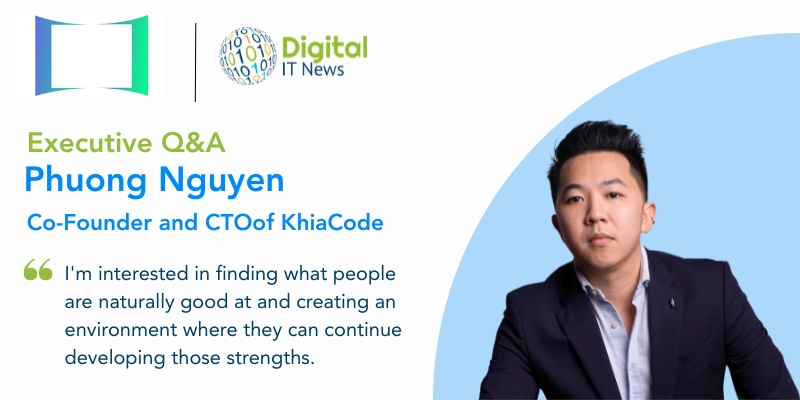
I’m more interested in finding what people are naturally good at and creating an environment where they can continue developing those strengths.
To be honest, I prefer solving technical problems to managing people. When it comes to technology, I can be very decisive. For many other things, I usually leave the decisions to people who are better suited to make them.
I think that has had a significant impact on our culture. People are given a high degree of autonomy. They’re encouraged to experiment, make mistakes, and learn from them. Over time, that has helped us build a team that remains curious, continues learning, and never stops improving.
Related News:
Flexera 2026 State of ITAM Report Released
Netwrix Data and Identity Report Reveals Gaps in AI Security Readiness