
RRMac Associates is a well-recognized provider of software, solutions, and services for companies of all sizes worldwide, supporting their business-critical applications on the IBM Z enterprise platform. RRMac’s expertise lies in integrating with and/or migrating from legacy SCM products to cross-platform, distributed tools such as Git, GitHub, and GitLab, enabling companies to meet the demands of a changing workforce without compromising data integrity and security.
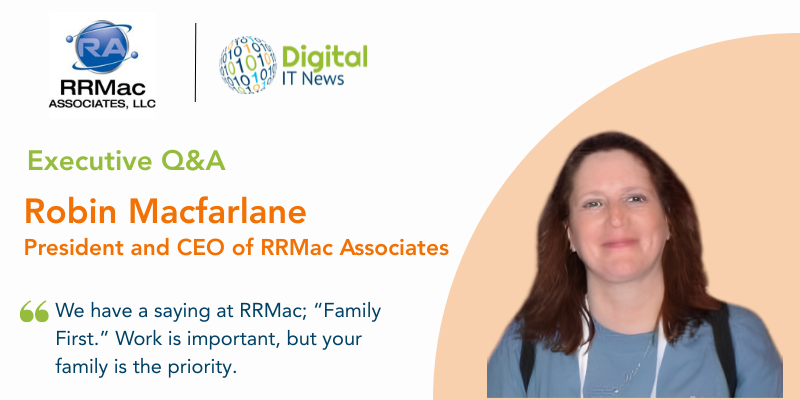
With over 45 years of experience in Enterprise IT transformation, Robin Macfarlane, President and CEO of RRMac Associates, LLC, has been a key driver of innovation in mainframe modernization. Under her leadership, RRMac has helped global enterprises modernize their core systems, embrace DevOps, and prepare for the future. Robin is a visionary leader who has positioned RRMac Associates as one of the top global brands in Mainframe Legacy and DevOps transformation. “Transforming legacy challenges into future growth opportunities.”
Can you share the most interesting story that happened to you since you started your career, especially one that shaped your leadership approach at your current company?
In the early days, being a woman in a man’s field was very difficult. I finally got to a point where I was the leading technical resource, with the highest security clearance anyone in the company could have, and I was respected by my co-workers. Then, I went to work as a developer at a start-up software company. I developed a streamlined code solution that was faster and slicker than anything else that was in use at the company. The rest of my teammates were proud and supportive.
When my solution got to the code review phase, I got major pushback because my solution, even though it was superior, wasn’t what had always been done. At that point, my teammates dropped their support of my solution, just so they wouldn’t rock the boat. The absolute defeat and deflation I felt in that moment is something I have carried with me throughout my career. Because of that experience, I swore I would never do that to one of my team members or employees. I never want to suppress creativity or innovation or squash the excitement one of my developers has over a solution they are developing.
What initially brought you to this specific career path, and how did it lead to your role in this company?
I never planned on starting my own company; that was an outgrowth of being excessed from one of the major SCM software companies back in 2005. However, I have been lucky enough to have experienced the SCM landscape from every point of view, so to speak, and that helps inform RRMac’s approach towards engagements. Over the course of my career, I have been employed in a variety of roles: I was an end user, a QA Manager, I worked with storage and security, I beta tested several products for IBM both as a customer and a business partner,
I was one of the developers of Rocket® ChangeMan® ZMF back when it was owned by Serena Software, specifically the Enterprise Release Option (ERO), which if you know what that is, was really the precursor to today’s modern DevOps pipelines. Because I experienced the evolution of technology firsthand at one point or another in my career, I have the ability to not only understand but empathize with the struggles and pain points of each player in the DevOps/Mainframe Modernization field, and that is invaluable when it comes to leading an IT company in today’s enterprise landscape.
What makes your company stand out from competitors in the market? Can you share an example that highlights this?
RRMac is unique in that we have developers from every generation and experience level, working together as a team. This allows us to understand and seamlessly implement every aspect of a company’s mainframe modernization journey. We have folks who can code in Assembler & Cobol and folks who can code in Groovy and Java. We have developers who know and understand DB2 and how it works not only on System Z, but in modern pipelines and SCMs like Git as well.
We have mainframe and distributed developers who bring their particular set of skills and expertise to the table, so there’s no need for our customers to chop up a major project among different companies, which leads to conflict and confusion over ownership, timelines, etc. To my knowledge, there really are no other companies out there that have all that knowledge and experience in-house, in this country, and immediately accessible like we do.
Are you working on any exciting new products or projects? How do you think this innovation will positively impact your customers?
We are always coming up with better, faster ways to do things. We have developed a lot of software and utilities to automate the mainframe modernization and migration process for our customers, which reduces costs and timelines. We are also integrating AI into our solutions when we can, always keeping security and privacy in the forefront. We also have an exciting mainframe education and automation tool, RRMac QTL, to which we are always adding new features.
What was the tipping point for your company’s recent success? Was there a change in strategy or approach that others might learn from?
I don’t know if we have a particular tipping point, as we are always very successful in the projects we take on. I think the key to that success is hiring extremely talented people who are real team players and having managers actively listen to their ideas. This brings freshness and enthusiasm to the entire company, and that contributes to the overall motivation of individual teams.
I would say that people in leadership positions should never get stuck in a strategy rut. Be willing to listen to what others have to say, even if it challenges your typical approach, because that just may be the spark that starts or re-starts your company’s fire.
Can you share a significant challenge your company faced and how you overcame it? What key lesson did that experience provide?
We recently completed an extremely large, multi-year engagement for one of the top ten healthcare companies in the world. We migrated almost a million components and brought the project in on time and in budget, despite numerous challenges. The customer repeatedly wanted changes mid – project, and that resulted in us developing a new offering to solve their problem. The ability of my team to be flexible enough in their deployment to stop, rethink, redesign, and execute code in a short amount of time was a valuable learning experience not only for them but for everyone at RRMac.
By embracing the inherent challenges that come with change and being willing to change yourself, or at least change your thinking or approach, RRMac achieved a higher level of success than it would have if the project had gone more smoothly. This really resonated with the entire RRMac team, not just the developers or project managers directly involved. Everyone stopped, as a whole, and said, “Wow. We did this”, and that kind of learning through experience is priceless motivation for meeting the next challenge.
In just a few words, what differentiates your leadership role from others in the company? What impact does this have on company culture or product success?
As CEO, I really try to reduce the mental stress and potential burnout of my teams in a 24/7 digital environment. I try to be as flexible as possible when it comes to schedules and allow my staff to strike a healthy work/family balance. We have a saying at RRMac: “Family First.” Work is important, but your family is the priority. If someone needs to take an afternoon off for a doctor’s appointment, or log off early to take their kids to a game, that’s fine. There’s no pressure to make work your highest priority, or censure when you can’t, or account for every hour of PTO.
We always have coverage and backup in place, so our project deliverables are never impacted. There is no single point of failure. I have found that when you respect your employees and their personal lives, you get respect back, and people naturally perform better and feel empowered to do a better job, which in turn increases retention rates and sets everyone up for long-term success.
Learn more about RRMac Associates, LLC at https://www.rrmac.com
Related News: