

An aging IT service platform rarely becomes a problem overnight. It accumulates one workaround at a time.
A team adds a custom process because the existing workflow no longer fits. Another integration gets layered on because two systems need to exchange information. Years later, the people maintaining the platform know exactly how temperamental it has become, but replacing it can sound even worse. The old system may be frustrating, yet at least everyone knows where the problems are.
That is how modernization gets postponed until the technology itself becomes a constraint.
Seagate reached that point with an IT service management platform it had used for 14 years. The system had become expensive to maintain and increasingly difficult to adapt to the automation and AI capabilities its IT organization wanted. Rather than spend years reproducing the old environment on something newer, Seagate moved more than 30,000 employees onto Freshservice globally in three months.
The speed is notable, but the more useful lesson is what happened afterward. Seagate did not treat the migration as the end of the project. Once employees were working in Freshservice, the company began reducing how often routine problems needed to reach a service agent in the first place.
Start With What People Actually Need to Do
IT transformations can become complicated when organizations try to preserve every process they accumulated in the system being replaced. That can turn modernization into an exercise in rebuilding old complexity on a newer platform.
A cleaner starting point is the experience on the other side of the service desk. An employee who forgot a password does not care which workflow engine handles the request, just as someone waiting for software access has little interest in understanding how IT has divided responsibilities internally.
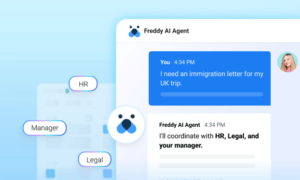
Image Credit: Magnific
At Seagate, Freddy AI Agent was made available through Microsoft Teams within a month of the Freshservice deployment, allowing employees to handle common requests before a ticket was created. Freshworks reports that the AI agent now deflects 32% of incoming requests.
That kind of self-service changes the modernization conversation because the goal is no longer simply moving tickets from one platform to another. IT can reconsider why some of those tickets existed at all.
The same thinking applies behind the scenes. Agents at Seagate were able to begin resolving work with little formal training, according to Freshworks, while first-contact resolution reached 94%. The strongest sign of adoption may be less numerical: Seagate’s IT leadership says the previous platform largely faded from employees’ memory after the transition.
Modernization Gets Easier When the Systems Connect
Replacing the service desk also creates an opportunity to address something that causes trouble long before a ticket reaches an agent: fragmented information.
An IT team may know that an employee is reporting a problem with an application without immediately knowing which infrastructure supports it or what else could be affected. When asset records live separately from service management, people spend time reconciling information before they can decide what to do.
Freshservice has been moving those functions closer together. Its newer IT asset management experience incorporates Device42’s continuous discovery and dependency-mapping capabilities directly into the platform, connecting asset information with IT service and operations workflows.
For Seagate, automated discovery surfaced more than 10,000 assets across its hybrid environment and synchronized that information into Freshservice, replacing parts of a process that had previously relied on manual tracking.
The practical benefit is that modernization can remove some of the seams between tools rather than asking teams to maintain them more efficiently. When service requests and infrastructure information share the same context, an agent investigating a problem has less hunting to do before understanding what is affected.
A New Platform Should Leave Less to Manage
There will always be large IT transformations that genuinely require years. Complex organizations cannot simply discard critical processes because a faster migration makes for a better case study.
But longevity should not automatically be treated as evidence of sophistication.
For IT leaders considering a service desk replacement, Seagate’s experience suggests a more useful way to think about the project. The first question may not be how faithfully a new platform can reproduce everything the old one does. It may be which parts of the old environment are still worth carrying forward.
Freshservice’s broader approach reflects that idea by bringing service management, automation, asset intelligence, and operations into a more unified environment. The purpose is not to give IT another collection of features to administer. It is to reduce how much coordination has to happen manually before an employee gets an answer or an agent understands the problem.
That is ultimately a better measure of modernization than how many new technologies appear on the architecture diagram.
If employees can get common problems resolved without opening tickets, agents can spend less time piecing together basic context, and the platform itself becomes easier to adapt, then the organization has changed more than its service desk. It has removed some of the work the old service desk taught everyone to accept as normal.
Related News:
ProCircular Expands Leadership Team to Support AI and Cybersecurity Growth