
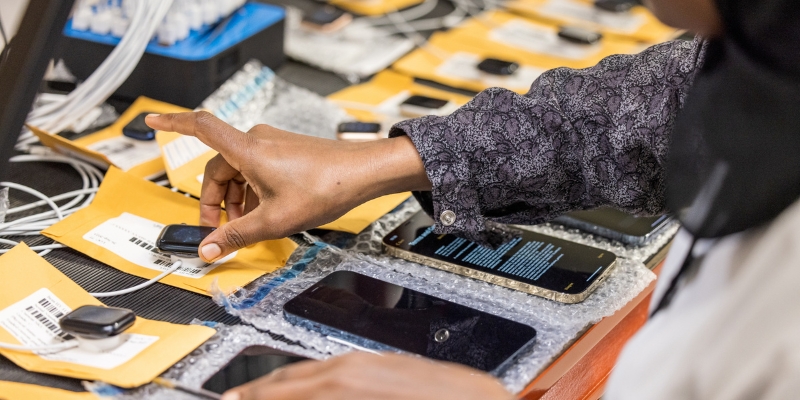
Alchemy has launched the first phase of a major new research initiative examining the consumer electronics trade-in market in the US. Conducted with CCS Insights, the initial results highlight a significant gap between consumer demand for trade-in programs and their availability at the point of sale.
Consumers in the US are holding approximately $83.74 billion in unrealized trade-in value from unused devices – value that brands, retailers and carriers could unlock through more accessible, stronger programs.
Every year, around one billion smartphones globally reach the end of their first useful life without being traded in*. The reason is two-fold: firstly, although the number of OEMs, retailers and carriers offering smartphone trade-in programs is constantly expanding, only 61% US of consumers surveyed were offered trade-in in their most recent smartphone purchase. Secondly, only 44% of consumers actually traded-in their smartphone.
Alchemy’s research, a survey of more than 2,000 US consumers, uncovered multiple compelling reasons why OEMs, retailers and carriers should invest in developing programs and unlock the revenue growth potential presented by trade-in:
-
Early upgrade: 71% of US consumers say a compelling trade-in offer would prompt them to replace their smartphone earlier, shortening upgrade cycles by six months on average.
-
Premium upgrade: 68% would upgrade to a more premium smartphone model if offered a trade-in value greater than $270+, encouraging upgrades to higher end models.
-
Increased basket: Trade-in also acts as an upsell trigger – 62% say affordability through trade-in would prompt them to add more accessories or extended warranties to their basket.
-
Increased loyalty: 84% of respondents are more likely to remain loyal and purchase their next smartphone from the same retailer or brand given a competitive trade-in value, showing a strong correlation between trade-in programs and customer loyalty.
The research also delved into the main consumer barriers that prevent trade-in from reaching its full potential. Despite strong interest in trade-in programs, fair valuation is cited as the primary obstacle by US consumers, with 27% expressing this as a concern, while 25% worry about data security when trading in devices. Finally, awareness gaps persist – 22% of consumers remain unaware that older models still have trade-in value for example – leaving significant value on the table for brands, retailers and end users.
Non-smartphone sectors also remain behind the curve, equating to billions in potential revenue and a missed opportunity to make premium technology more affordable and accessible across the wider consumer electronics industry. Household appliance industries achieved the lowest trade-in uptake, with just 20% of consumers participating in trade-in programs for kitchen appliances and 14% for floorcare products. Despite this, 52% of consumers in these segments expressed an intention to trade-in in the future, showing the significant opportunity presented by trade-in, even in categories not traditionally associated with strong trade-in programs.
Stephen Wise, Director Global Marketing at Alchemy: “We’ve known for a while that consumers want trade-in options, but this research shows just how much money brands are leaving on the table by not offering them. When nearly a third of US shoppers aren’t even being asked if they want to trade-in at the point of purchase, that’s a massive missed opportunity not just for revenue and loyalty, which keeps customers coming back, but for the planet too as millions of usable devices end up scrapped instead of recirculated.”
“The numbers are clear: people will stick with brands that make trade-in easy and rewarding. And when they do trade-in, they’re more likely to upgrade to better devices, add accessories, and replace their tech more regularly. It’s a win for everyone – brands get loyal customers and greater customer lifetime value, consumers get access to better tech at more affordable prices, and devices stay in use longer instead of sitting in drawers or ending up in landfill.”
Ben Wood, Chief Analyst at CCS Insight, added: “This research reinforces the momentum we’re seeing across global consumer tech buying behavior. Trade-in has moved from niche to mainstream, but the next step is consistency. For manufacturers and retailers, clear offers and transparent processes will be essential to convert intent into action and meet the huge consumer appetite identified in this study.” Trade-in has moved from niche to mainstream, but the next step is consistency. For manufacturers and retailers, clear offers and transparent processes will be essential to convert intent into action and meet the huge consumer appetite identified in this study.”
From OEM, retailer and carrier perspectives, brand leaders see trade‑in as far more than an ESG initiative – it’s becoming a proven growth and loyalty engine. As one household appliance manufacturer explained, “trade‑in is an acquisition tool for us, it’s how we bring new customers into our ecosystem.” Others emphasized retention benefits, noting that “those who trade-in with us remain more loyal and are likely to come back and buy again in future.”
The opening findings of Alchemy’s research indicate a market ready for scale: consumers motivated by value and simplicity, and brands recognizing that trade-in delivers measurable commercial and environmental returns.
Related News:
Guardsquare Expands Mobile Security with XTD Technology
SCD Partners with Recast to Highlight Free Intune Tools
Notes to Editors
Alchemy commissioned CCS Insight to conduct independent research which was carried out in October 2025. The research combines insights from in-depth industry interviews with leading OEMs, retailers and carriers, a quantitative survey of more than 3,000 US and UK consumers (2,000 and 1,000 respectively), and focus group discussions exploring motivations and barriers around trade-in.
Trade-in gap methodology:
The total untapped value figure for the US is derived from a nationally representative consumer survey conducted by Censuswide (2,000 respondents) and official US household statistics.
Censuswide surveyed 2,000 US adults and found an average of 2.43 unused devices per household, with an average perceived value of $255.68 per device among those with unused tech in their household. Multiplying the total average household value ($621.30) by the number of US households (approximately 134.8 million) gives a total of approximately $83.74 billion in unrealized trade-in value. This figure represents the collective perceived value of unused devices among households that have unused tech.
*(CCS Insight Pulse: Second Hand Mobile Devices, 2025).