
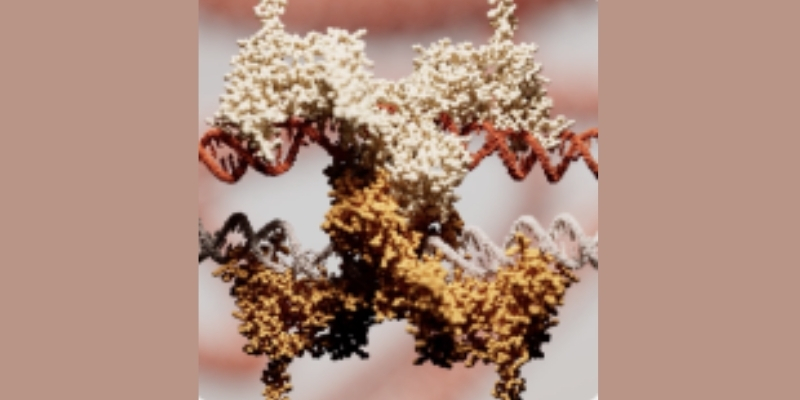
Basecamp Research unveiled the first AI models designed for programmable gene insertion, enabling precise replacement of defective genes and the reprogramming of cells for therapeutic applications. Developed in collaboration with NVIDIA, the models support the advancement of next-generation treatments for cancer and inherited disorders. At the same time, Basecamp Research received investment from NVentures, NVIDIA’s venture capital arm, as part of its pre-Series C round, building on years of technical collaboration to accelerate ongoing research and development.
“We believe we are at the start of a major expansion of what’s possible for patients with cancer and genetic disease,” said John Finn, Chief Scientific Officer at Basecamp Research. “By using AI to design the therapeutic enzyme, we hope to accelerate the development of cures for thousands of untreatable diseases, potentially transforming millions of lives.”
Programmable Gene Insertion
Programmable gene insertion – placing large therapeutic DNA sequences at precise locations in the human genome – has been a central goal in genetic medicine for decades. Existing CRISPR-based approaches can only make small edits and must damage DNA to do so, limiting where and how they can be used. Basecamp Research is the first to demonstrate that AI can design enzymes capable of performing large gene insertion at defined sites in the human genome, opening a long-sought path toward programmable therapies.
Basecamp Research’s AI-Programmable Gene Insertion (aiPGI™) platform is powered by EDEN, a new family of evolutionary AI models developed with NVIDIA, trained on BaseData™, the company’s proprietary genomics dataset – the largest of its kind. The models learn the language of DNA and patterns of evolution, allowing the algorithms to design new, programmable therapies for cancer and genetic disease.
In lab results published today in a paper co-authored by NVIDIA, Microsoft and leading academics, [link], the EDEN models designed multiple active insertion proteins for 100% of tested disease-relevant target sites in the human genome, requiring only the genomic target site as a prompt and marking a significant step forward in AI model capability.
Basecamp Research has already demonstrated insertion at over 10,000 disease-related locations in the human genome, including therapeutically relevant integration of cancer-fighting DNA into primary human T cells at novel safe-harbour sites. This produced CAR-T cells that show strong killing of cancer cells, showing over 90% tumour-cell clearance in laboratory assays.
AI-Designed Molecules To Fight “Superbugs”
In another key frontier therapeutic design task targeting the global drug-resistance crisis, the same model proved its versatility by designing a focused library of novel antimicrobial peptides (AMPs) – small proteins with the potential to kill harmful bacteria – with 97% of candidates demonstrating confirmed activity in laboratory tests. In a collaboration with University of Pennsylvania scientists led by Prof. César de la Fuente, the top-performing AMPs showed high potency against critical-priority, multidrug-resistant pathogens, offering a powerful new tool in the fight against dangerous “superbugs.”
Breakthrough powered by unique data & frontier AI models
The EDEN models that power aiPGI™ were trained on over 10 trillion tokens of evolutionary DNA from more than one million newly-discovered species. This data was collected over five years from over 150 locations across 28 countries and five continents as part of a novel data collection strategy pioneered by the company, published in June 2025.
The largest EDEN model was trained on 1.95×1024 FLOPS of compute on a cluster of 1,008 NVIDIA Hopper GPUs and accelerated with libraries from NVIDIA BioNeMo, making it comparable in scale to GPT-4 class models and placing it among the most computationally intensive biological models ever reported.
Therapeutic assets in development
These capabilities underpin Basecamp Research’s emerging pipeline of cell and gene therapies, opening the path to treatments that are more precise, predictable and personalised than those available today. The company’s goal is to develop potentially curative therapies across a range of cancer and genetic disease indications, powered by continued improvements to BaseData™, the EDEN models and aiPGI™.
Learn more about how programmable gene insertion is enabling a new generation of AI-driven therapies for cancer and genetic diseases.
Related News:
NVIDIA Launches BioNeMo for Biopharma and Science
The Great Healthcare Disruption: How AI Is Reshaping Medicine
BaseData™, Beyond Known Biology™, EDEN-GLM™ and aiPGI™ are brand names and technologies of Basecamp Research.