
Parallels released results from its 2026 State of Cloud Computing Survey, highlighting a significant shift in enterprise EUC strategy compared to last year. While 2025 decisions were largely shaped by cost and complexity, this year’s findings show IT leaders responding to broader pressures such as vendor lock-in concerns, operational burnout, and a widening disconnect between AI hype and practical business needs.
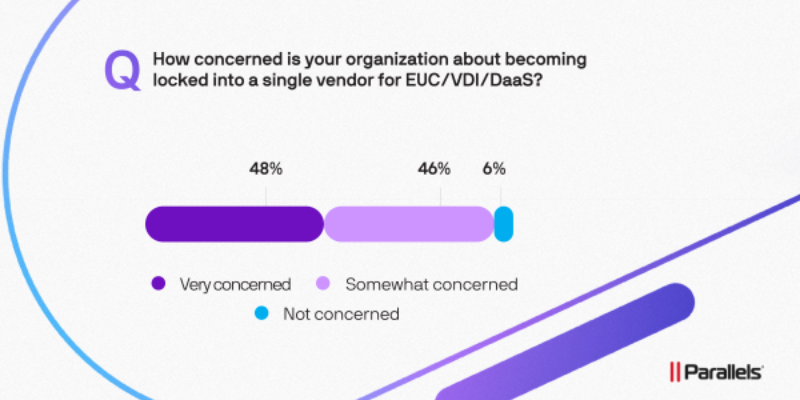
The 2026 State of Cloud Computing survey found that 94% of organizations are concerned about vendor lock-in, up from last year’s already elevated anxiety around long-term viability and support. Nearly half of respondents say they are very concerned, with uncertain product roadmaps (46%) and fears over future support (57%) now playing a larger role in platform decisions than in 2025.
“Last year, organizations were focused on escaping rising costs,” said Prashant Ketkar, Chief Technology and Product Officer at Parallels. “This year, they are focused on avoiding regret. IT leaders want automation that reduces workload, architectures that support hybrid reality, and the freedom to change course as needs evolve.
AI Expectations Mature from Excitement to Execution
In 2025, AI was widely viewed as a differentiator. In 2026, buyers are more selective. The survey shows organizations want AI to reduce operational burden, not add complexity:
- 47% prioritize AI for issue detection
- 41% want automated application patching
- 39% seek reduced administrative overhead
Despite heavy vendor messaging, only 29% of respondents are willing to pay more for AI features, signaling a move away from experimental investment toward outcome-driven automation. This reflects a broader shift from aspirational transformation to measurable efficiency compared with last year’s more exploratory posture.
VDI Fatigue Deepens as IT Time Costs Rise
The hidden operational cost of virtual desktop infrastructure (VDI) has become more visible year over year. In 2025, IT resource strain ranked as a top concern. In 2026, the survey quantifies that impact:
- 85% of organizations spend one to ten hours per week managing VDI
- 68% say IT staff time is now the single biggest hidden cost, an increase in urgency from last year’s findings
- Nearly 30% cite training and onboarding as a major challenge, reinforcing workforce strain
This mounting fatigue is accelerating platform change. While 58% of organizations were seeking a new VDI or DaaS solution in 2025, that number has risen to 66% in 2026, with 53% planning to implement a new solution within four to six months. Last year, most respondents expected change within twelve months, signaling a faster and more decisive reset this year.
Cloud-Only Confidence Gives Way to Hybrid Reality
In 2025, many organizations were still pursuing cloud-first strategies while managing cost and complexity. The 2026 data shows a more pronounced correction.
- 49% now operate multi-cloud environments, up from last year
- 33% run hybrid deployments
- 49% are actively considering or planning a move back to on-premises or hybrid models
Cost volatility and data sovereignty concerns are driving this shift. Security pressures reinforce it. Nearly half of respondents experienced a security breach in the past twelve months, compared with heightened concern but fewer confirmed incidents reported last year. At the same time, 84% express concern about data sovereignty, yet only 6.5% use browser isolation, exposing a widening control gap as SaaS and shadow IT usage expands.
Survey Methodology
The Parallels’ survey was conducted in November 2025 with data from 540 IT professionals across the United States, the United Kingdom, and Germany about their cloud journeys to discover what’s working, what isn’t, and what’s next. To see the full results of the 2026 State of Cloud Computing Survey, visit the website here.
Related News:
Parallels RAS 21.0 Debuts with Major Hybrid Cloud and Security Upgrades
Parallels Desktop 26 Launches with macOS Tahoe 26, Windows 11 25H2 Support