
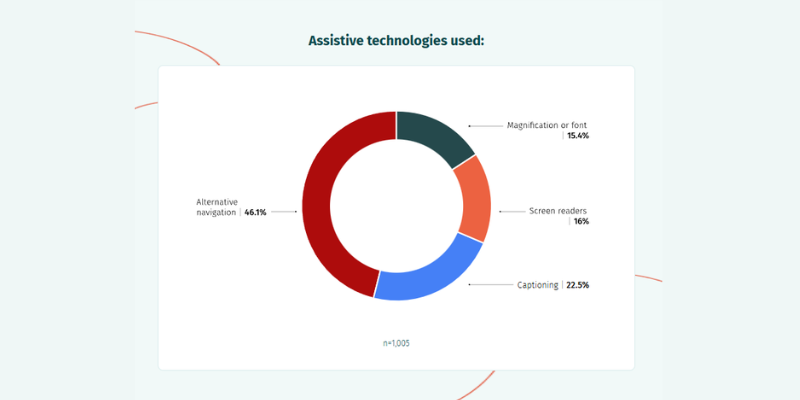
Applause released findings from its 6th annual State of Digital Quality in Accessibility 2026 report, highlighting global trends in accessibility testing and assistive technology use. The report found that 78% of organizations are using AI to enhance accessibility across websites and applications, yet 56% of assistive technology users said they have regularly encountered inaccessible apps since January 1, 2026. While most organizations pair automated testing with manual validation, the report notes that accessibility gaps can still go undetected without input from the disability community.
The State of Digital Quality in Accessibility 2026 report is based on Applause’s 2026 accessibility survey of more than 500 development and QA professionals and over 1,000 people who use assistive tech to interact with apps and websites. For 66% of the users surveyed, it is difficult or impossible to interact with digital technology without AT. 92% of AT users are likely to abandon experiences incompatible with screen readers, captioning, font magnification, alternative navigation and other features.
“More teams are incorporating AI-powered accessibility testing tools into the development process, even at the coding stage,” said Bob Farrell, VP of Solutions Delivery & Accessibility, Applause. “This tells us that teams are thinking about inclusivity sooner, and are leveraging the latest tools to add speed and scale. However, these tools miss up to 80% of meaningful accessibility issues that are not machine-discoverable. That’s why brands like ShareFile come to Applause — to keep pace without sacrificing quality. We have a global testing community including people with disabilities who review apps and websites in the real world to ensure inclusive design and compatibility with assistive tech.”
Key themes and findings from the State of Digital Quality in Accessibility 2026:
Teams use AI tools to address accessibility throughout development in a number of ways:
- Use AI coding tools to address/remediate accessibility issues: 60%
- Use coding agents to generate accessible code on new features: 58%
- Provide AI-powered features for users: 56%
- Write test cases to check accessibility: 54%
- Generate alt text for images: 50%
- Scan sites or apps for accessibility issues: 47%
- Generate captions or subtitles for audio or video: 45%
AI confidence contradicts AI concerns.
- 22% of respondents believe their AI-powered auditing tools accurately identify 75% or more of accessibility issues.
- 53% of AI accessibility scanning tool users are concerned about tool accuracy. 24% of respondents said their tools flag false issues, and 13% reported they miss accessibility issues altogether. 16% said the tools fall into both of these traps.
- Automated tools only catch 20% to 40% of meaningful accessibility issues. (“Why Automated Accessibility Testing Tools Miss So Much”)
When using apps, AT users are consistently blocked by accessibility issues.
- Since the start of the year, assistive tech users encountered issues using apps that prevented them from completing a task.
- For 28% of AT users, issues occurred monthly.
- 17% of them experienced these challenges weekly.
- 11% experienced blocking issues even more frequently.
When it comes to accessibility testing, humans are in the loop.
- Only 10% of organizations rely on AI-powered accessibility tools alone.
- 90% validate automated test results with some sort of manual testing.
- Automated tools scan code and find gaps but miss contextual cues that surface issues easily found by human testers.
Inclusive design is critical to business success.
- Brand loyalty is a factor for 97% of assistive tech users. 62% of them consider themselves extremely loyal to brands that offer accessible digital experiences.
- 44% of AT users said they are highly likely to abandon apps with poor accessibility.
- 47% of them are somewhat likely to abandon apps with poor accessibility.
“Working with the Applause team — and its global community of real users, including people with disabilities — has helped us decrease accessibility defects by more than 60% year over year,” said Ivan Ereiz, Senior Director of Product Design & Research, ShareFile.
“Being able to demonstrate that we’re prioritizing accessibility has helped us both retain existing customers and attract new ones, as compliance with regulations can be a crucial factor in the procurement process,” added John McCartney, Senior Manager of User Experience, ShareFile. “As we continue to work with Applause to shift left and move toward a culture of inclusive design, we expect to see even greater impact on the business.”
Farrell continued: “The majority of organizations incorporate some form of manual testing to complement AI-powered accessibility checks. What could make these checks more effective is having users with disabilities involved, and generally, testers with expertise in accessibility and inclusive design. That expertise includes knowledge of the latest WCAG and EAA requirements, and more. When your mission is to create exceptional digital experiences for all users, the disability POV is invaluable.”
The State of Digital Quality in Accessibility 2026 report is part of the State of Digital Quality series from Applause — an extension of 15+ years of helping global organizations achieve and deliver accessible and inclusive experiences to their customers. Based on in-depth analysis of testing platform data, survey results and interviews with clients and internal experts, the report provides guidance on how organizations can build and grow programs that enable optimal, inclusive digital experiences for all users, regardless of disability status.